
Bachelor of Science in Operating Room
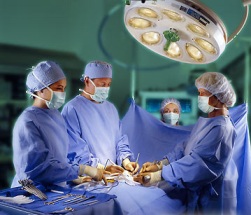
Continuous bachelor of sciences of operating room and surgical technology is a branch of medical sciences, in which students are familiarized with the new principles of the operating room and novel technologies in specialty and subspecialty surgeries, as well as the care of patients before, during and after surgery. Graduates of this field will be members of healthcare teams, which acts as part of the surgical team to contribute to surgeries with desirable outcomes in the operating rooms of hospitals and mobile healthcare centers, while partaking in diagnostic and interventional measures.
Background
The curriculum of operating room is presented in two main formats across the world: in the first format, the graduates of nursing bachelor’s degree are trained within a 1-2-year course for the operating room. In the second format, students in the level of pre-bachelor of sciences receive the general training for the operating room in order to be prepared for their role as a mobile healthcare provider. If willing, they will participate in a 1.5-2.5-year course to become the first assistant of surgeons.
For instance, in the University of Karolinska, nurses could obtain the degree of operating room as a qualified healthcare professional of the operating room after completing the bachelor’s degree and obtaining a work permit as an RN. Furthermore, in the College of Operating Room Nurses of Australia, after the bachelor’s level and obtaining a work permit as an RN, nurses could complete an approved university course by completing 27 courses and become involved before, during and after surgery, while taking up the role of an anesthetics nurse, circulate nurse, registry nurse, equipment nurse, assistant surgeon, recovery nurse, postoperative nurse, and a nurse for the evaluation and education of patients preoperatively.
A review of the patient care standards in the American Institution of Operating Room Nurses also shows that the students of operating room technician courses could continue education in higher academic levels. Considering that healthcare professionals have various responsibilities depending on their grade, role of the individuals who have completed specialty courses largely differs from operating room technicians in medical practice.
According to the standards of the Association of Surgical Technologists (AST), individuals involved in operating rooms hold various educational degrees. For instance, to be a scrub, surgical technologists initially have to be trained on general practices in three levels. In the second level, the healthcare professional will be able to perform specialized roles, while in the third level, they will be engaged in managerial fields.
The field of operating room was established in Iran during 1987-2001 in the level of apprenticeship and was promoted to the level of continuous and intermittent BSc since 2008 in various universities across the country. This field is normally offered in the schools of paraclinical sciences or nursing. In these schools, the department of operating room is responsible for the management of the students of this field. In Iran, no prior fields have been similar to the field of operating room in the BSc level; students have mostly started with the apprenticeship of this field and would be scientifically and practically promoted by taking part in the entrance exam of intermittent BSc to be employed as an operating room nurse or in other sectors.
Background of the Department of Operating Room at MUMS
The Department of Operating Room at MUMS was founded in 1978. During 1978-2007, the department would offer apprenticeship courses and since 2008, it has been admitting students in the levels of intermittent and continuous BSc to the present. Admission of students in the intermittent BSc level continued until 2015, which was terminated based on the policies of the ministry of health.
Necessity of the Profession and Professional Promotion
Surgical technologists are significant members of the healthcare teams, who guarantee the wellbeing of patients through close interactions with surgeons, anesthesiologists and nurses. It is expected that the need for surgical technologists rise within the coming years given the increasing rate of surgeries, growing population of the elderly (who require surgeries more than other community members) and changing roles of surgical technologists. On the other hand, remarkable transformations in surgical techniques requires surgical technicians to upgrade their roles and responsibilities, while educational curricula have to be improved accordingly in order to meet the needs of operating room personnel in the future. These goals could be achieved by establishing the BSc level of operating room, which facilitates gaining the desired knowledge and skills.
Mission
The field of operating room in the level of continuous BSc aims to train knowledgeable, efficient and committed workforce, who are able to acquire professional skills in the operating room by exploiting the latest technologies in order to provide educational and healthcare services of economic cost and high quality in line with the global standards, thereby improving the health of the individual and community.
Personal Traits Needed for the Field
To meet the standards of this profession, honesty and ethical compliance are of paramount importance. A competent surgical technologist must adopt a healthcare approach toward the patient and other surgery team members. Furthermore, they should be agile, detail-oriented and able to prioritize under emergency conditions. Therefore, we need individuals with a strong sense of responsibility and stable character, who are patient, enthusiastic to help others and sensitive to the needs of the patients and other surgery team members.
In addition, physical strength is essential to working in the operating room since it requires the individual to stand up for long durations of time, lift heavy objects, be exposed to undesirable views and odors and take the risk of exposure to contagious diseases and hazardous materials.
Continuing Education to Higher Academic Levels
Currently, some medical universities across the country admit students in the MSc of operating room. Moreover, graduates could continue education in sciences such as anatomy, physiology, medical equipment engineering and first surgeon assistance. Department members hope that with the approach to expand postgraduate education in type-one universities, the MSc of this field be established in MUMS in near future.
Duration of the BSc of Operating Room
The duration of the continuous BSc of operating room has been determined in accordance with the educational guidelines of the continuous and intermittent BSc courses approved by the Excellence Council of Medical Education Planning. The duration is a minimum of four years and maximum of five years (under particular circumstances only, such as leave of absence, with the agreement of the educational department of the university).
Course Titles and Credits
Total credits of the continuous BSc in the field of operating room is 130, as follows:
General courses: 22 credits
Core, specialized and apprenticeship courses: 84 credits
In-field apprenticeship courses: 24 credits
Job Opportunities
Most surgical technologists are employed in hospitals and mobile healthcare centers. Although hospitals are the primary employers of this group of professionals, it is expected that they would be increasingly recruited by other sectors, such as mobile surgery centers, outpatient care centers and physicians’ offices. At any rate, the following options are also open to the graduates of this field given their expertise and vast medical knowledge:
Specialty in different fields of interest, such as cardiac surgery, orthopedics and pediatrics;
Employment by a medical organization to present their products;
Training of surgical technologists;
Military services;
Recruitment as a counselor
It should be noted that some of the mentioned options require extra training courses.
Bachelor of Science in Anesthesia
Field Name and Definition
BSc of anesthesia is a branch of medical sciences, which familiarizes he students with the new principles, patient care, methods and equipment used for anesthesia, especially in specialty and subspecialty surgeries, such as the cardiac, large arteries and thoracic surgeries, neurosurgeries and organ implantations.
The graduates will be recruited in teaching and healthcare centers in order to aid anesthesiologists in the anesthesia, maintenance and consciousness gaining of the patients admitted in the post-anesthesia care unit (PACU), recovery room, acute pain management service (APMS) and critical care units, under the direct supervision of anesthesiologists.
Background of Anesthesiology
In Iran, no prior fields have resembled anesthesiology so far, while in other countries, various related courses are presented using different curricula, educational contents and course durations. In the U.S. and U.K., this field is known as “nurse anesthesia”, “bachelor of science in anesthesia”.
Considering the advancements in the science of anesthesia and the related technologies and equipment, it is necessary to recruit the graduates of this field in the operating rooms for specialty and subspecialty surgeries, PACU, APMS and critical care units in order to provide effective healthcare services.
Background Of Anesthesiology In MUMS
The Department Of Operating Room And Anesthesiology At MUMS Has Been Admitting Students In These Fields In The Levels Of Apprenticeship (1985-2008) And BSc Of anesthesiology (since 2008). Since 2008, the department has been admitting students in the intermittent BSc of anesthesiology, which was terminated in 2015 in line with the educational policies of the ministry of health.
Professional Duties of the Graduates
Healthcare Role:
A) Recognition of the general status of the patient and performing care measures before anesthesia
1. Information on the patient records, status and medical history;
2. Cooperation with the anesthesiologist in the testing of the equipment and devices of anesthesia, preparing the necessary instruments and medications and ensuring of their efficacy;
3. Cooperation with the physician in creating the proper intravenous-peripheral pathway;
4. Cooperation with the physician in the attachment and plugging of monitoring devices to the patient;
5. Cooperation with the anesthesiologist in the positioning of the patient;
6. Cooperation with the physician in recording and controlling the vital signs of the patient;
B) Patient Care during Anesthesia:
1. Helping the anesthesiologist in bringing the patients back to consciousness
2. Helping with the transfer of patients to the PACU
3. Lodgment in the PACU and providing care services to the admitted patients
4. Controlling and recording of the vital signs and monitoring of various body systems in the patients until full consciousness and reporting of abnormal cases
5. Controlling the signs and symptoms of hypoxia and reporting of abnormal cases to the anesthesiologist
6. Efficient use of oxygen therapy and humidifiers based on the orders of the anesthesiologist
7. Participation in methods of isolation and infection control
8. Recording and archiving of patient and treatment costs reports
9. Participation in the preparation and maintenance of the equipment and facilities of the PACU
10. Observance of safety codes in the PACU
C) Care Role in APMS:
1. Participation in the admission and preparation of the patient for therapeutic measures under the supervision of the anesthesiologist
2. Participation in the preparation and maintenance of the APMS equipment
3. Contribution in performing acute pain management methods to the anesthesiologist
4. Familiarization with the complications associated with APMS and informing the anesthesiologist for treatment
5. Cooperation in the discharge of the patient from the APMS
In addition, graduates of the BSc of anesthesiology could function as the members of CPCR teams to create and manage the airways and perform other tasks.
Communicative Role:
1. Communication with anesthesiologists, surgery team members, operating room personnel and students
2. Interaction with related units to the operating room, such as laboratory, blood bank, radiology and medical engineering
3. Communication with the nursing unit and administrative system of hospital